Introduction
You’ve probably seen someone reply with “ight” in a text or comment and wondered if it was a typo or some kind of code. You’re not alone. The phrase pops up everywhere online, especially in casual chats and social media. So, what does ight mean, and why do people use it so often?
In this article, we’ll break down the meaning of ight, where it comes from, how it’s used today, and how you can understand it without feeling out of the loop.
What Does “Ight” Mean?
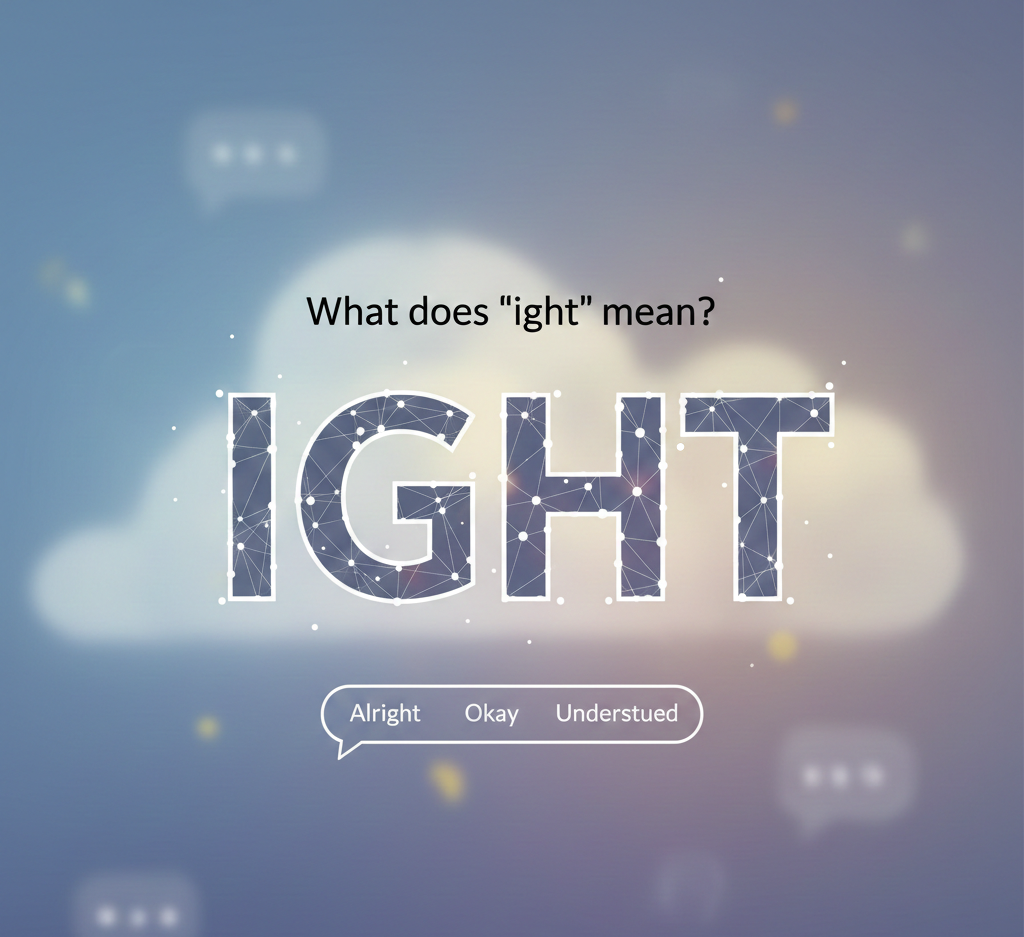
At its core, “ight” means “alright”—just shortened and spoken more casually. It’s an informal slang term used to show agreement, acceptance, or acknowledgment.
Depending on the context, ight can mean:
-
“Okay”
-
“Sounds good”
-
“I understand”
-
“That’s fine”
It’s not formal English, but it’s extremely common in everyday conversations, especially online.
Where Did “Ight” Come From?
The Origins of “Ight”
“Ight” comes from African American Vernacular English (AAVE) and urban slang. Over time, the word “alright” was shortened in speech, eventually becoming ight in text and casual talk.
As texting and social media grew, so did the use of abbreviated slang words—and ight became mainstream.
How It Became Popular
“Ight” spread through:
-
Hip-hop culture
-
Social media platforms
-
Text messaging
-
Online gaming chats
Today, it’s widely understood, even outside the communities where it originated.
How Is “Ight” Used in Conversations?
Common Ways People Use “Ight”
“Ight” is versatile and can be used in different tones depending on the situation.
Examples:
-
“Meet at 8?”
“Ight.” -
“I’ll send you the file later.”
“Ight, thanks.” -
“We’re changing the plan.”
“Ight, whatever works.”
Tone Matters
“Ight” can sound:
-
Positive – showing agreement
-
Neutral – just acknowledging
-
Slightly dismissive – if used alone or dryly
The meaning depends heavily on how and where it’s used.
Is “Ight” Formal or Informal?
“Ight” is strictly informal. You wouldn’t use it in:
-
Professional emails
-
Academic writing
-
Job applications
Instead, it fits best in:
-
Text messages
-
Social media comments
-
Casual conversations with friends
If you’re unsure, stick with “okay” or “alright” in formal settings.
“Ight” vs. “Alright” vs. “Aight”
You might see similar versions and wonder if they’re different.
Here’s a quick breakdown:
-
Alright – Standard English, neutral and safe
-
Aight – Informal slang, similar meaning
-
Ight – Even more casual, often used in texting
They all mean roughly the same thing, but the tone becomes more relaxed as the word gets shorter.
Why Do People Use “Ight” So Much?
People love “ight” because it’s:
-
Fast to type
-
Casual and friendly
-
Easy to understand
-
Perfect for short replies
In digital conversations, shorter words feel more natural—and ight fits right in.
Can “Ight” Have Different Meanings?
Yes, context can change how ight feels.
For example:
-
Excited agreement: “Ight! Let’s go.”
-
Passive response: “Ight…”
-
Neutral acknowledgment: “Ight, noted.”
The word itself doesn’t change, but the emotion behind it does.
FAQs About “Ight”
What does ight mean in texting?
In texting, ight usually means “okay” or “alright.” It’s a quick way to agree or acknowledge a message.
Is ight a real word?
“Ight” isn’t considered a standard dictionary word, but it’s widely accepted slang and commonly used in everyday language.
Is ight rude?
Not usually. However, if used without context or enthusiasm, it can sound dismissive.
Can I use ight in school or work?
It’s best to avoid it in formal settings. Use “okay” or “alright” instead.
What’s the difference between aight and ight?
They mean the same thing. “Ight” is just a shorter, more casual version.
Also Read: JP Meaning in Text
Conclusion
So, what does ight mean? Simply put, it’s a casual way of saying “alright” or “okay.” It’s informal, flexible, and deeply rooted in modern digital communication.
Understanding slang like ight helps you stay connected, read conversations correctly, and respond naturally. If you’re interested in learning more everyday slang and modern language trends, keep exploring—there’s always something new to pick up.
About the Author