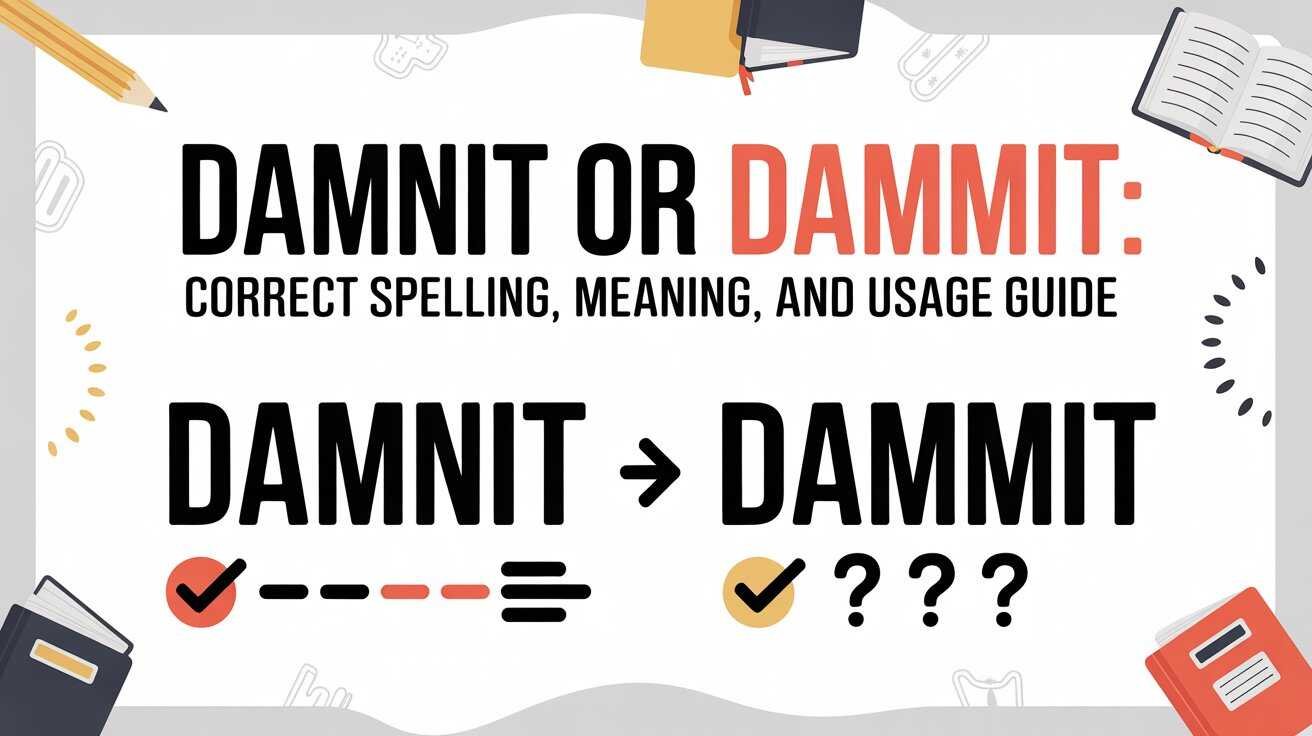
Damnit or dammit — have you ever wondered which spelling is correct? You are not alone. Many writers, students, and casual English users struggle with this seemingly small but confusing word. Understanding the proper spelling, meaning, and usage can help you avoid common mistakes, communicate clearly, and even sound more natural in conversation and writing. In this article, we will explore dammit, damnit, and damn it, their origins, differences, correct usage, and helpful tips for every context.
What Does “Dammit” or “Damnit” Mean?
Dammit is an informal contraction of “damn it”. It is used as a quick, expressive way to convey frustration, annoyance, or anger. While both dammit and damnit attempt to capture this expression, only dammit is widely recognized in dictionaries and formal writing guides.
The word can appear in casual speech, dialogue, social media posts, or informal writing. Tone matters — using it in professional emails or academic papers is generally discouraged. The pronunciation is straightforward: /ˈdæm.ɪt/, with emphasis on the first syllable.
Examples of usage:
- “Dammit, I forgot my keys again!”
- “I told him not to spill the coffee, but dammit, it happened.”
Notice that in each sentence, the word conveys strong emotion quickly, making it a common choice in dialogue and informal writing.
Correct Spelling: Dammit vs Damnit vs Damn It
Spelling is where most confusion arises. Let’s break it down:
| Word | Correctness | Notes | Usage Context |
|---|---|---|---|
| Dammit | ✅ Correct | Accepted in dictionaries; informal contraction | Casual writing, dialogue |
| Damn it | ✅ Correct | Two-word version; more formal than dammit | Formal or semi-formal |
| Damnit | ❌ Incorrect | Common typo or non-standard spelling | Avoid in professional writing |
Key takeaway: Always use dammit in casual writing and damn it in more formal contexts. Damnit is considered a misspelling and should generally be avoided.
Informal vs Formal Usage
Understanding tone is crucial when deciding which form to use.
- Informal usage: Use dammit for dialogue, social media, texts, and creative writing. It conveys emotion directly and fits casual tones.
- Formal usage: Use damn it if you must express frustration in reports, essays, or professional communications. Avoid damnit completely, as it can harm credibility.
For example:
- Informal: “Dammit, I missed the bus!”
- Semi-formal: “I am disappointed that the meeting was canceled — damn it.”
When to Use Dammit, Damnit, or Damn It
Here’s a simple guide to choosing the right form:
- Casual speech or writing: Use dammit. It’s expressive and natural.
- Professional or semi-formal writing: Use damn it for clarity and formality.
- Avoid “damnit”: Even though it appears online or in texts, it is not accepted in standard English.
Example sentences for context:
- “Dammit, I spilled the coffee again!”
- “Damn it, we missed the deadline.”
- “He typed damnit, but it’s a typo that should be corrected.”
This approach ensures your writing is consistent, professional, and credible while keeping the tone appropriate.
READ MORE >>> Signer or Signor: What’s the Correct Word to Use?
Common Mistakes and Misconceptions
Many people mistakenly type damnit, influenced by phonetic spelling and fast typing. Some think it’s casual enough to use in informal writing. However, professional style guides clearly mark damnit as incorrect.
Other common misconceptions include:
- Dammit and damn it are interchangeable in all contexts – not true. Tone and formality matter.
- Damnit is just a regional variation – false; it’s a misspelling, not standard in any major English dialect.
- It’s fine to use in academic writing – avoid it; opt for damn it or better yet, rephrase entirely.
Historical and Cultural Insights
The word dammit originates from the phrase “damn it”, which itself has been used since the 16th century. Historically, it was considered mild profanity, mainly expressing anger or frustration.
In literature, movies, and pop culture, dammit appears frequently in dialogue to capture authentic emotional reactions. Examples include:
- Films: Characters often exclaim “Dammit!” in moments of frustration.
- Novels: Authors use it in dialogue to make characters relatable and emotionally expressive.
American vs British English:
- Both varieties recognize dammit and damn it.
- “Damnit” rarely appears in standard British or American English, mostly seen online or in casual texting.
Pronunciation and Phonetics
For learners of English, correct pronunciation matters:
- Dammit: /ˈdæm.ɪt/
- Damn it: /ˈdæm ɪt/
Tips for ESL learners:
- Stress the first syllable in dammit.
- Avoid blending the words too much when saying “damn it” to keep it clear.
Alternatives to Dammit for Polite Writing
Sometimes, you need to express frustration without using mild profanity. Here are polite alternatives:
- Darn it – casual and widely acceptable
- Oh no – neutral and suitable for professional writing
- Shoot – informal but non-offensive
- Rats – old-fashioned but acceptable in polite contexts
Example:
- Informal: “Darn it, I forgot my notes at home.”
- Professional: “Oh no, the report was not submitted on time.”
Dammit in Dialogue and Creative Writing
In creative writing, dammit is a powerful tool to convey emotion. Writers often use it to make dialogue feel natural and realistic.
Example:
- Character in a novel: “Dammit, I thought I told you to lock the door!”
- Screenplay: A frustrated character exclaims “Dammit!” after a plan fails.
Using dammit in dialogue helps capture authentic human reactions, which is often missing in overly polished writing.
Social Media, Texting, and Informal Contexts
Dammit is widely used in online posts, tweets, and text messages. It conveys instant emotion and frustration.
Example:
- Tweet: “Dammit, missed my favorite show again!”
- Text: “Dammit, I left my wallet in the car.”
Damnit is more common online due to fast typing and phonetic spelling, but it should still be corrected when possible.
Tips for Writers and Students
- Always prefer dammit over damnit.
- Use damn it for semi-formal writing.
- Avoid excessive use; overuse can make writing feel informal or unpolished.
- Practice using alternatives when tone requires politeness.
- For ESL learners: read examples aloud to get comfortable with pronunciation and tone.
Quick Reference Table: Dammit vs Damnit vs Damn It
| Word | Correctness | Usage Context | Tone | Notes |
|---|---|---|---|---|
| Dammit | ✅ Correct | Casual writing | Emotional | Dictionary-approved; informal |
| Damn it | ✅ Correct | Formal/Semi-formal | Neutral | Two-word version; more formal |
| Damnit | ❌ Incorrect | Avoid | Informal | Misspelling; non-standard |
FAQs about Dammit and Damnit
Q1: Is damnit ever correct?
A: No, damnit is considered a misspelling. Use dammit or damn it instead.
Q2: Can I use dammit in professional writing?
A: Generally, no. Use damn it or rephrase to keep a professional tone.
Q3: Are dammit and damn it interchangeable?
A: They are similar in meaning, but context matters. Use dammit in casual contexts and damn it in formal ones.
Conclusion: Best Practices for Using Dammit Correctly
In summary, the correct usage is clear: use dammit for casual writing and dialogue, damn it for formal or semi-formal contexts, and avoid damnit entirely. By understanding tone, context, pronunciation, and history, you can write more confidently and naturally.
Remember, dammit is not just a word — it’s an expressive tool that captures frustration and emotion. Use it wisely, mix in polite alternatives when needed, and your writing will feel both authentic and credible.
About the Author