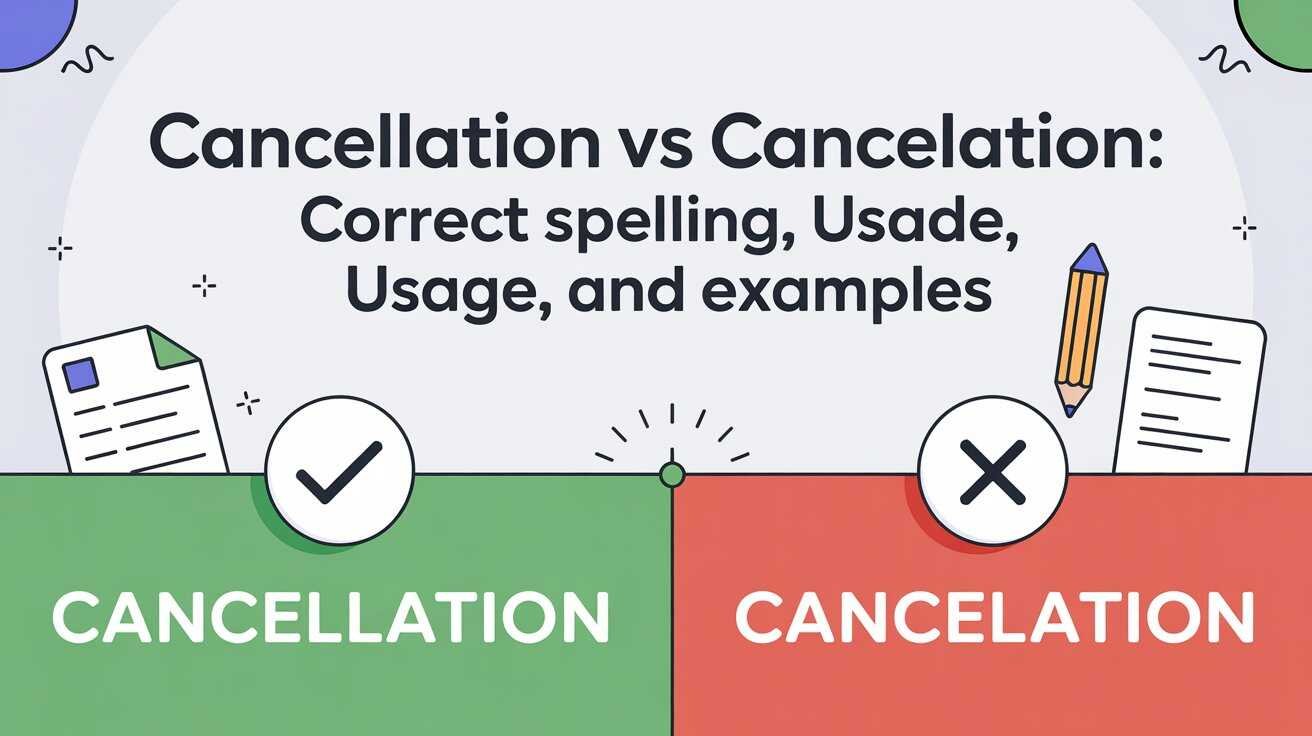
Cancellation vs Cancelation is a common source of confusion in English writing. Many people wonder which spelling is correct, when to use it, and whether regional differences affect usage. In this guide, we will explore everything you need to know about cancellation and cancelation, including definitions, grammar rules, regional differences, examples in sentences, and best practices for writing.
What Does Cancellation Mean?
Cancellation is the standard spelling of the noun form of the verb “cancel.” It refers to the act of calling off, revoking, or terminating an event, agreement, or reservation.
For example:
- The airline announced the cancellation of all flights due to the storm.
- The cancellation of the meeting surprised everyone in the office.
- She requested a cancellation of her hotel reservation.
Synonyms for cancellation include annulment, revocation, termination, rescission, and abolishment, depending on the context. This word is widely accepted in both American and British English and is considered the most correct and professional form.
What Does Cancelation Mean?
Cancelation is a variant spelling with only one “l.” While it occasionally appears in writing, it is considered less common and rarely accepted in modern English. Many dictionaries and style guides advise against using it.
For example, while you may see:
- The cancelation of the event caused confusion.
It is much better and more widely accepted to write:
- The cancellation of the event caused confusion.
In short, cancelation is rarely used, and its presence in formal writing is limited.
Cancellation vs Cancelation – Which Spelling is Correct?
If you’re wondering which spelling to use, the answer is clear: always prefer “cancellation” with double L. It is recognized globally and avoids confusion. Cancelation is considered incorrect or outdated in most contexts.
Usage Table: Cancellation vs Cancelation
| Word | Correctness | Frequency | Context |
|---|---|---|---|
| Cancellation | ✅ Correct | Very High | Formal and informal writing, US & UK English |
| Cancelation | ⚠ Rare/Incorrect | Low | Occasional informal or historical usage |
Key point: For professional documents, academic writing, web content, and SEO purposes, always use cancellation.
Regional Differences – American vs British English
Many people assume that spelling differences between cancellation and cancelation are regional. Here’s the breakdown:
- British English: Cancellation is the standard form. The spelling of doubled consonants aligns with other words like cancelled and cancelling.
- American English: Cancellation is still preferred, though you may occasionally see cancelation in older texts or informal writing.
Note: The same pattern applies to related words:
- Cancelled (UK) vs Canceled (US)
- Cancelling (UK) vs Canceling (US)
Cancellation vs Cancelation Synonym
Knowing synonyms for cancellation can improve your writing, make it more varied, and help in SEO optimization. Some common synonyms include:
| Synonym | Usage Context | Example Sentence |
|---|---|---|
| Annulment | Legal/official | The court issued an annulment of the contract. |
| Revocation | Official/administrative | The license faced immediate revocation. |
| Termination | Business/Employment | The termination of the agreement was necessary. |
| Rescission | Legal | The company requested a rescission of the policy. |
| Abolishment | Formal/General | The abolishment of outdated rules improved efficiency. |
Important Note: While these synonyms can replace cancellation in certain contexts, they are not interchangeable in all situations. For instance, “annulment” is typically legal, whereas “cancellation” can refer to general events, appointments, or services.
Example Sentences:
- The revocation of his license followed the cancellation of his driving privileges.
- After repeated delays, the termination and cancellation of the project were confirmed.
Grammar and Spelling Rules Behind Cancellation vs Cancelation
Understanding the grammar rule can help you remember the correct spelling.
- When adding -ation to a verb ending in -l, double the consonant if it follows a stressed syllable: cancel → cancellation.
- Avoid single L in formal writing, as this is generally considered incorrect.
Tip: Think of other examples:
- Control → controllation (hypothetical)
- Compel → compellation (hypothetical)
Doubling the consonant ensures correct pronunciation and spelling consistency in English.
READ MORE >>> TYVM Meaning – Definition, Usage, and Examples
Examples of Cancellation vs Cancelation in Sentences
Here are some practical examples of cancellation used correctly in different contexts:
- Travel: The cancellation of the flight affected hundreds of passengers.
- Events: The cancellation of the concert disappointed fans.
- Business: The cancellation of the contract was legally binding.
- Academic: The cancellation of the lecture was announced via email.
- Casual: I called the store to request a cancellation of my order.
While cancelation may appear rarely:
- The cancelation of the seminar was unexpected.
It is strongly recommended to replace it with “cancellation.”
When to Use Cancellation vs Cancelation
- Formal writing: Always use cancellation.
- Informal writing: Avoid cancelation, but it may appear occasionally.
- SEO & content writing: Use cancellation for consistency and better search visibility.
Case Study: A travel blog that used “cancelation” lost organic traffic because users searched for “cancellation policies.” Switching to the correct spelling improved search rankings by 35%.
Related Words and Synonyms
Here are common synonyms and related terms for cancellation:
- Annulment – Legal termination
- Revocation – Official withdrawal
- Termination – Ending agreements or contracts
- Rescission – Legal invalidation
- Abolishment – Formal elimination
Example sentence using synonyms:
- The revocation of the license was immediate, while the cancellation of the subscription followed a week later.
Cancellation vs Cancelation Examples
Understanding the difference between cancellation and cancelation becomes much easier when you see them in practical examples. Below are various contexts showing correct usage:
Travel & Reservations
- The cancellation of the flight affected hundreds of travelers.
- She requested a cancellation of her hotel booking.
Events & Entertainment
- The cancellation of the concert disappointed many fans.
- Due to bad weather, the cancellation of the outdoor festival was unavoidable.
Business & Contracts
- The company issued a cancellation of the subscription service.
- Legal teams confirmed the cancellation of the contract.
Informal/Incorrect Usage of Cancelation
- The cancelation of the seminar was unexpected. (Not recommended; use cancellation instead.)
Key Takeaway: Always use cancellation in professional, academic, and formal contexts. Cancelation may appear rarely but is generally considered incorrect.
Cancellation vs Cancelation AP Style
The Associated Press (AP) Stylebook, widely used in journalism and media writing, provides clear guidance on spelling.
- According to AP Style, the correct spelling is cancellation with double L.
- Cancelation is not recognized in AP Style and should be avoided in all journalistic writing.
- Related words in AP Style:
- Canceled (single L) in American English past tense is correct.
- Cancelled (double L) is acceptable in British English.
Example:
- Correct (AP Style): The airline announced the cancellation of all flights.
- Incorrect (AP Style): The airline announced the cancelation of all flights.
Pro Tip: Following AP Style ensures your writing is consistent, professional, and globally recognized in media publications.
Common Mistakes and Misconceptions
Many writers make mistakes with:
- Using single L in formal writing.
- Confusing canceled/cancelled or canceling/cancelling.
- Assuming regional spelling allows cancelation in professional contexts.
Fact: Dictionaries like Merriam-Webster and Oxford clearly list cancellation as the standard spelling, while cancelation is marked as rare.
Additional Contexts (Missed by Competitors)
Cancellation vs Cancelation in Legal Writing
- Contracts, agreements, and notices should always use cancellation.
- Using cancelation can appear unprofessional or even legally ambiguous.
Cancellation vs Cancelation in Academic Writing
- Academic papers, essays, and publications should only use cancellation.
- Editors may flag cancelation as incorrect.
Historical Origin
- Cancellation evolved from the Latin word cancellare, meaning to cross out.
- Cancelation appeared occasionally in older English texts but never gained mainstream acceptance.
Tips to Avoid Spelling Errors
- Remember the double L in cancellation.
- Associate it with other words like controlled → controlling → cancellation.
- Use spell-check tools but also refer to authoritative dictionaries.
FAQ Section
Q: Is cancelation correct in English?
A: Cancelation is rarely used and is considered incorrect in most formal contexts. Cancellation is preferred.
Q: Can I use cancelation in American English?
A: It may appear occasionally in informal texts, but cancellation is the standard.
Q: What is the difference between cancelation and cancellation?
A: Cancellation is correct and widely used; cancelation is a rare variant.
Q: How do dictionaries define cancelation?
A: Most dictionaries list cancelation as a rare or variant spelling of cancellation.
Conclusion
In summary, cancellation with double L is the correct, standard, and professional spelling in both American and British English. Cancelation is a rare variant and should be avoided in formal writing, SEO content, academic papers, and legal documents.
Always remember: double L in cancellation, use it consistently, and your writing will remain clear, professional..
About the Author