When it comes to the English language, many people often get confused between bright vs brite. Although they sound identical when spoken, their usage, meaning, and acceptability are very different. Understanding this difference is crucial for both professional and everyday writing, as using the wrong version can make your text appear unprofessional or unclear. In this article, we will explore the definitions, differences, usage, history, and tips to always remember the correct spelling.
What Does “Bright” Mean?
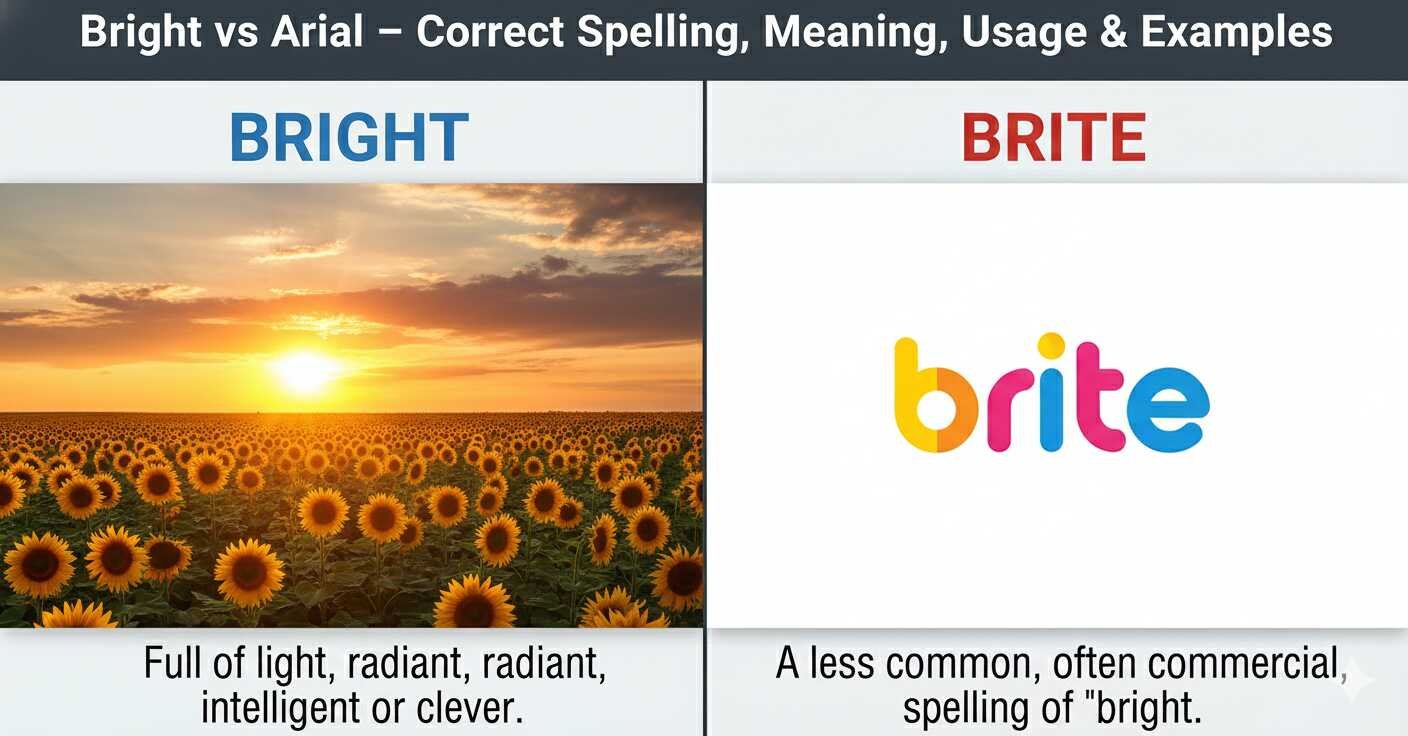
The word bright is a versatile adjective in English, and it primarily means something that emits or reflects light, has vivid color, or conveys intelligence or positivity. For example, you might say, “The sun is very bright today,” or “She is a bright student with a promising future.”
In addition to physical brightness, it can also describe abstract qualities, such as hope, optimism, or intelligence. Synonyms include luminous, radiant, vivid, clever, cheerful, and promising. Its pronunciation is /braɪt/, which is identical to brite, the non-standard variant.
Examples in sentences:
| Context | Example Sentence |
|---|---|
| Everyday life | “It’s a bright sunny morning.” |
| Academic / Writing | “The experiment showed bright results.” |
| Idiomatic | “She has a bright future ahead.” |
| Science | “The star is exceptionally bright.” |
Is “Brite” Ever Correct?
Many people assume that brite is just an alternative spelling of bright, but that is not true in standard English. The word brite is considered a non-standard, stylized variant that appears mostly in brand names, marketing materials, or product titles. For example, popular products like Lite-Brite and Scotch-Brite use this spelling intentionally for branding purposes.
Using brite in everyday writing, essays, or professional documents is incorrect and can make your writing appear careless. Always reserve it for stylized or creative contexts.
Bright vs Brite – Main Differences
To make the distinction crystal clear, here’s a side-by-side comparison of bright and brite:
| Feature | Bright | Brite |
|---|---|---|
| Spelling | Correct | Incorrect / Stylized |
| Meaning | Light, vivid, intelligent, cheerful | Stylized / Brand usage only |
| Acceptable Usage | Formal writing, academic, everyday English | Branding, marketing, product names |
| Dictionary | Recognized | Not recognized |
| Example | “The sun is very bright today.” | “I bought a Lite-Brite toy.” |
This table shows that while they sound the same, only bright is appropriate in standard English writing.
READ MORE >>> Momment or Moment– Correct Spelling, Meaning, and Usage Explained
How to Pronounce Bright and Brite
Both bright and brite are pronounced the same way: /braɪt/. This is why many people confuse them. Although the pronunciation is identical, the context and spelling determine whether the word is correct. Always use bright in formal writing and reserve brite for brand or product names.
Common Mistakes With Bright and Brite
Even native English speakers make errors with bright vs brite. Common mistakes include:
- Using brite instead of bright in essays, emails, or articles.
- Confusing the words due to identical pronunciation.
- Misunderstanding the contexts where brite is acceptable.
For instance, writing “The sun is very brite today” in an academic paper is incorrect. Mistakes like these can undermine your credibility.
Tip: Always proofread and remember that bright contains “right”, making it easier to recall the correct spelling.
When to Use Bright vs Brite
The correct usage depends on the context:
Formal / Academic / Professional Writing: Always use bright. Examples include essays, reports, articles, and professional emails.
Informal / Branding / Marketing: Brite is acceptable in product names, logos, or creative marketing content. Examples include Lite-Brite toys or Scotch-Brite cleaning products.
Understanding this distinction will help you write confidently and avoid mistakes in the wrong context.
History and Etymology of “Bright”
The word bright originates from the Old English word beorht, meaning shining or light. Over time, it evolved into the modern spelling we use today. The simplified spelling “brite” emerged later, mainly due to branding, marketing, and modern creative stylization.
Brands adopted “brite” to make product names more memorable, visually appealing, and trademark-friendly. This is why you see it in toys, cleaning products, and marketing slogans, but never in formal writing.
Why Brands Choose “Brite”
Using brite instead of bright in brands is a marketing strategy. Companies want:
- Memorability: Short, catchy, and easy to recognize.
- Modern Appeal: Gives products a contemporary, playful vibe.
- Trademark Protection: Unique spelling helps secure brand identity legally.
For example, Lite-Brite, a famous children’s toy, uses this spelling to stand out and be instantly recognizable. This strategy is widespread in advertising and product naming.
Tips and Tricks to Remember Correct Spelling
Here are some practical tips to never confuse bright and brite:
- Mnemonic Trick: “Bright contains ‘right’” — if you’re unsure, choose bright.
- Context Check: Ask yourself, “Am I writing an essay, report, or article?” → use bright. “Am I naming a brand or product?” → brite may be okay.
- Use Tables or Cheat Sheets: Keep a small reference table for quick guidance.
Quick Reference Table: Bright vs Brite
| Usage Context | Correct Spelling |
|---|---|
| Essays / Academic Writing | Bright |
| Professional Emails | Bright |
| Everyday Sentences | Bright |
| Product Names / Brand Logos | Brite |
| Marketing Materials | Brite |
Examples of Bright in Sentences
To further clarify, here are multiple real-world examples:
- Everyday English: “The room is very bright because of the sunlight.”
- Academic / Professional: “Her presentation was bright and engaging.”
- Idiomatic Usage: “He has a bright future ahead.”
- Scientific / Technical: “The star appeared extremely bright through the telescope.”
Using these examples consistently in your writing reinforces the correct usage.
FAQs – Bright vs Brite
Q1: Which is correct, bright or brite?
A1: Bright is the correct spelling in standard English. Brite is only used in branding or marketing.
Q2: Is brite a word?
A2: Technically, no. Brite is a non-standard, stylized spelling, not recognized in dictionaries.
Q3: How do you spell bright correctly?
A3: Always use b-r-i-g-h-t in all formal and everyday contexts.
Q4: What does bright mean?
A4: Bright means light-emitting, vivid, intelligent, optimistic, or cheerful.
Q5: Can brite be used in writing?
A5: Only in brand names, marketing slogans, or creative contexts. Avoid it in formal or academic writing.
Conclusion – Never Confuse Bright and Brite Again
In summary, bright vs brite may sound the same, but the difference is significant. Bright is the correct and standard English spelling, suitable for all writing, while brite is reserved for brands, marketing, and stylized text. By understanding the meanings, contexts, and pronunciation, you can confidently choose the right word every time.
Remember the mnemonic: “Bright contains ‘right’”, and refer to your cheat sheets or comparison tables when in doubt. With these tips, you’ll never mix up bright and brite again.
About the Author