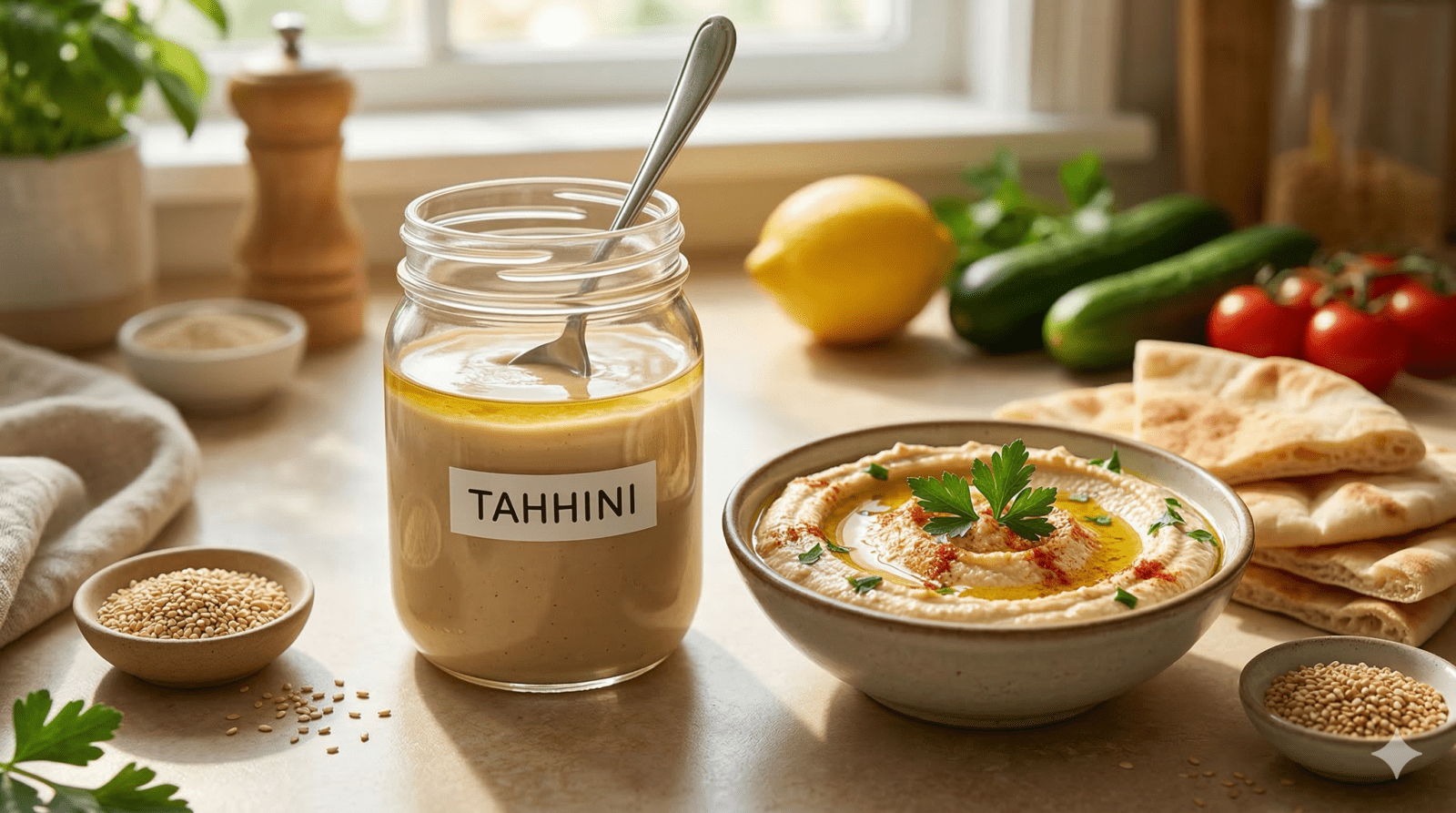
Tahini: Everything You Need to Know About This Liquid Gold
Introduction: What Exactly Is Tahini and Why You’ll Love It
Have you ever wondered what makes restaurant hummus so incredibly creamy and smooth? The secret is tahini. This magical ingredient comes from crushed sesame seeds, and it creates pure magic in your kitchen. Think of tahini as peanut butter’s sophisticated cousin who grew up traveling the world. It has a rich, nutty taste that makes everything better. You might have eaten tahini before without even knowing it.
That delicious sauce drizzled on falafel sandwiches? Yep, that’s tahini. The creamy dip that comes with your Mediterranean veggie platter? Also tahini. This ancient food has been around for thousands of years, and once you bring it home, you’ll understand why people never stopped making it. It turns ordinary meals into something special with almost zero effort on your part .
The Amazing Ancient History of Sesame Paste
Tahini isn’t some trendy new health food that just appeared on Instagram. People have been enjoying tahini for a really long time. We’re talking thousands of years here. The earliest records show humans enjoyed sesame paste way back in 3500 BC. Can you imagine eating something that people discovered before the pyramids were built? Ancient cooks in Persia, which is modern-day Iran, first started grinding sesame seeds into a smooth paste they called “arde.” From there, this delicious creation spread throughout the Middle East and Mediterranean regions.
Different cultures added their own touches, but the basic idea stayed the same: take beautiful sesame seeds, toast them gently, and grind them until they become pure creamy perfection. The name tahini comes from the Arabic word “tahin,” which simply means “to grind.” So every time you say tahini, you’re speaking a word that connects you to ancient food lovers just like you .
What Makes Tahini So Special and Different
Let’s get clear on what tahini actually is, because there’s sometimes confusion at the grocery store. Pure tahini contains exactly one ingredient: sesame seeds. That’s it. No weird additives, no preservatives, no extra junk. Just seeds that have been transformed into liquid gold. Some companies add a tiny bit of oil to make stirring easier, but traditional tahini needs nothing but sesame seeds and patience. The grinding process releases the natural oils hidden inside each tiny seed, creating a smooth, pourable paste that looks a lot like natural peanut butter. High-quality tahini has a light tan color and flows like thick cream. When you taste it, you’ll notice warm, nutty flavors with just a hint of pleasant bitterness in the finish. This bitterness isn’t a bad thing. It actually makes tahini work beautifully in both sweet and savory recipes by adding depth that other ingredients just can’t match .
The Incredible Health Benefits Packed in Every Spoonful
Your body will thank you for eating more tahini. This isn’t empty calories we’re talking about here. Every single tablespoon of tahini delivers serious nutrition that supports your health in multiple ways. You get healthy fats that actually help your heart work better, plus protein to keep you feeling full and satisfied. The mineral content in tahini reads like a vitamin commercial. Copper shows up in big amounts, giving you about 27% of what you need daily. Your body uses copper to make red blood cells and keep your nerves healthy.
Selenium comes next, offering nine percent of your daily needs while helping fight inflammation throughout your body. Phosphorus arrives at nine percent too, working hard to maintain your bones and teeth. Even calcium makes an appearance, which surprises people who think dairy is the only source. All these nutrients come wrapped in a delicious package that costs pennies per serving .
How Tahini Protects Your Heart and Fights Inflammation
Here’s where tahini really shines as a health superstar. The sesame seeds that become tahini contain powerful compounds that doctors and researchers get excited about. Studies show that people who eat sesame seeds regularly often have lower blood pressure compared to those who don’t. The healthy fats in tahini help lower those bad cholesterol numbers while keeping your good cholesterol exactly where it should be.
One study followed people with osteoarthritis who added sesame seeds to their daily routine. After just two months, their triglyceride levels dropped significantly and their LDL cholesterol improved. That’s pretty impressive for simply enjoying delicious food .
The anti-inflammatory benefits deserve their own spotlight too. Chronic inflammation causes all sorts of problems as we age, from joint pain to more serious conditions. Tahini contains sesamol, a natural compound that research shows can reduce inflammatory markers in the body. One analysis found that people consuming sesame products daily had lower levels of interleukin-6, which is basically a messenger protein that promotes inflammation. So every time you drizzle tahini on your lunch bowl, you’re actively supporting your body’s healthy inflammatory response .
Different Types of Tahini You Should Know About
Not all tahini tastes the same, and knowing the differences helps you pick the perfect jar for your cooking style. Most grocery stores carry tahini made from hulled white sesame seeds. “Hulled” means the outer shell got removed before grinding, which creates a smoother, less bitter paste with a lighter color. This works great for most recipes and pleases the widest range of eaters. If you want maximum nutrition, look for tahini made from unhulled seeds. Keeping the hull on means more fiber, more calcium, and more of everything good. The trade-off comes in the flavor, which tends toward stronger bitterness that some people love and others find overwhelming .
Black sesame tahini has become easier to find lately, and it’s absolutely stunning in person. This stuff looks like black tar but tastes like roasted sesame turned up to eleven. The flavor runs much more intense and toasty than regular tahini, with a complex bitterness that works beautifully in desserts and noodle dishes. Chefs love using black tahini when they want dramatic presentation and bold flavor. Some brands also make roasted tahini versus raw, with roasted versions delivering deeper, warmer notes perfect for savory applications .
How to Buy the Best Tahini at the Store
Finding quality tahini keeps getting easier as more Americans discover this amazing ingredient. You don’t need to visit speciality Middle Eastern markets anymore, though those often have excellent options if you live near one. Regular grocery stores now stock tahini in several places. Check the international foods aisle first, usually near other Mediterranean ingredients. You might also find it near the peanut butter and other nut butters, which makes sense because tahini is basically sesame butter. Some stores keep it with the oils and vinegars, especially higher-end brands .
When you pick up a jar, flip it over and read the ingredients. Good tahini contains exactly one thing: sesame seeds. That’s your gold standard. Some brands add salt, which is fine if you know about it, but salted tahini limits how you can use it in sweet recipes. Avoid products with added oils, especially cheap vegetable oils, because they dilute the flavor and change the texture. Look at the color too if the jar allows. Quality tahini looks creamy and light, not dark and dried out. Price often reflects quality here, so spending a few extra dollars usually means noticeably better taste .
Storing Your Tahini the Right Way
Let’s talk about what happens after you bring that precious jar of tahini home. Proper storage makes a huge difference in how long your tahini stays fresh and delicious. Here’s the thing about sesame seeds: they’re packed with delicate oils that can go bad if treated poorly. You’ll notice this immediately if you ever taste rancid tahini. The flavor turns sharp and unpleasant, almost like paint thinner mixed with old nuts. Nobody wants that on their beautiful food .
The storage debate among tahini lovers comes down to fridge versus pantry. If you go through tahini quickly, like within a month or two, keeping it in a cool, dark cabinet works fine. Just make sure it’s away from the stove or any heat source. For longer storage, the refrigerator wins every time. Cold temperatures slow down the oxidation process that causes rancidity, keeping your tahini fresh for up to six months. The downside involves stirring. Cold tahini separates and thickens, making it nearly impossible to mix without warming it first. Run the jar under hot water for a few minutes or microwave it very briefly, then stir vigorously until smooth again .
Simple Ways to Use Tahini Every Day
You might wonder what to actually do with tahini beyond making hummus. The possibilities will surprise you. Start your morning by spreading tahini on warm toast, then drizzle with honey and sprinkle with sea salt. This simple breakfast tastes like something from a fancy café but takes thirty seconds to prepare. For lunch, whisk tahini with lemon juice, a little water, and minced garlic until smooth. This creates the most incredible salad dressing you’ve ever tasted, creamy without any dairy and packed with flavor. Pour it over roasted vegetables, grain bowls, or simple greens .
Dinner gets exciting when tahini enters the picture. Stir a spoonful into soups right before serving to add body and richness without cream. Marinate chicken or fish in tahini mixed with lemon and spices, then grill or bake for incredibly moist, flavorful results. You can even thin tahini with water and use it as a dairy-free sauce for pasta or grain dishes. The mild bitterness cuts through rich foods beautifully, making everything taste more balanced and complete .
The Perfect Homemade Tahini Recipe
Making your own tahini at home costs less than buying it and tastes incredible. Plus, you control exactly what goes into it. Start with one cup of hulled sesame seeds. White sesame seeds work best for classic tahini, but feel free to experiment. Pour them into a dry skillet over medium heat and cook for three to five minutes, stirring constantly. You want the seeds fragrant and lightly golden, not burned. Burnt seeds create bitter tahini that nothing can fix, so watch carefully and keep those seeds moving .
Let the toasted seeds cool completely before proceeding. Hot seeds won’t grind properly and can damage your blender. Once cooled, transfer them to a food processor or high-powered blender. Add a pinch of salt and start grinding. This takes patience because sesame seeds go through stages. First they become a coarse meal, then a thick paste, and finally smooth tahini. Stop to scrape down the sides regularly. If your machine struggles, add a tablespoon or two of neutral oil like grapeseed or light olive oil. The whole process takes about ten minutes, and the result fills about one cup of liquid gold. Store it in a jar in your fridge for up to one month .
Exciting Tahini Recipes Beyond Hummus
Ready to expand your tahini horizons? Let’s explore recipes that showcase this ingredient in new ways. Tahini cookies might sound strange, but they’re absolutely wonderful. The sesame flavor pairs perfectly with chocolate chips or dried fruit, creating chewy, nutty cookies that disappear fast. Mix tahini with maple syrup and a pinch of salt for an instant caramel-like sauce that transforms ice cream or fresh fruit into company-worthy dessert .
For savory adventures, try making green tahini sauce. Blend fresh herbs like parsley and cilantro with tahini, lemon juice, garlic, and enough water to create a pourable sauce. This vibrant green magic works on grilled meats, roasted vegetables, or simply as bread dip. You can also whisk tahini into mashed potatoes for the creamiest version you’ve ever eaten, no butter required. The nutty flavor adds sophistication while the texture becomes impossibly smooth. Even simple roasted carrots become memorable when drizzled with tahini and sprinkled with toasted sesame seeds .
Black Tahini: The Dramatic Dark Horse
Have you seen black tahini at the store and wondered what makes it different? This striking ingredient starts with black sesame seeds instead of the usual white ones. The seeds keep their dark hulls during processing, which creates that dramatic black color and amplifies the flavor significantly. Black tahini tastes more intense, more toasty, and more complex than regular tahini. Some people describe it as having almost savory, umami qualities that regular sesame paste doesn’t reach .
Cooking with black tahini opens creative doors. Use it in noodle dishes with soy sauce and rice vinegar for an Asian-inspired sauce that looks stunning. Swirl it into cheesecake batter for dramatic marbling and nutty flavor. Drizzle it over vanilla ice cream and watch guests’ eyes widen at the presentation. Black tahini costs more than regular and can be harder to find, but a single jar lasts a long time because you use it sparingly for maximum impact. Start with one recipe and see if you fall in love like so many cooks have .
Answering Your Biggest Tahini Questions
Is tahini the same as sesame paste?
Yes, tahini is exactly sesame paste. The words describe the same thing: ground sesame seeds transformed into a smooth, spreadable consistency. Some brands label their jars “sesame paste” to help American shoppers understand what’s inside, while others stick with tahini for authenticity. Either way, you’re getting the same delicious ingredient .
Can I eat tahini if I have nut allergies?
Most people with nut allergies tolerate tahini perfectly because sesame seeds aren’t tree nuts. They’re seeds harvested from flowering plants, completely different from peanuts and tree nuts. However, some individuals have specific sesame allergies, so check with your doctor if you’re unsure. Also watch for cross-contamination warnings on labels if your allergies are severe .
Why does my tahini separate in the jar?
Separation proves you bought quality tahini. Natural sesame oil rises to the top while solids sink, exactly like natural peanut butter behaves. This happens because no stabilizers or hydrogenated oils interfere with nature’s design. Simply stir everything back together before using. A chopstick works well for reaching the bottom corners. Store stirred tahini upside down to make future mixing easier .
What does bad tahini taste like?
Rancid tahini tastes sharp, bitter in an unpleasant way, and almost metallic. Fresh tahini has pleasant bitterness balanced by rich, nutty sweetness. If your first taste makes you pucker or want to spit it out, the tahini has probably gone bad. Trust your senses completely here .
Can I freeze tahini for longer storage?
Freezing works great for tahini you won’t use quickly. Portion it into small containers, leaving headroom for expansion. Thaw in the refrigerator overnight, then warm slightly and stir well before using. Frozen tahini keeps for up to a year without quality loss .
Is tahini good for weight loss?
Tahini can support healthy weight management when eaten in reasonable amounts. The protein and healthy fats keep you full longer, reducing the urge to snack on empty calories. Plus, the rich flavor means a little goes a long way. One tablespoon adds plenty of taste to your meals for under 90 calories .
Conclusion: Start Your Tahini Adventure Today
You now know everything needed to bring tahini into your kitchen and your heart. This ancient sesame paste delivers incredible flavor, impressive nutrition, and amazing versatility that few ingredients can match. Whether you drizzle it on grain bowls, bake it into cookies, or simply spread it on morning toast, tahini rewards you with rich nutty goodness every single time.
The next time you’re at the grocery store, grab a jar of quality tahini and start experimenting. Try the simple lemon-garlic sauce first, then work up to cookies and marinades. Your taste buds will thank you, your body will appreciate the nutrition, and you’ll wonder why tahini wasn’t always in your life. Have you cooked with tahini before? Drop your favorite recipe in the comments below and share the tahini love with fellow food lovers .
Comparison of Tahini Varieties
| Type | Main Ingredient | Flavor Profile | Best Uses | Nutritional Notes |
|---|---|---|---|---|
| Light Tahini | Hulled white sesame seeds | Mild, nutty, slightly bitter | Hummus, dressings, sauces | Lower fiber, smooth texture |
| Unhulled Tahini | Whole sesame seeds with hulls | Stronger, more bitter | Spreads, savory dishes | Higher calcium and fiber |
| Black Tahini | Black sesame seeds | Intense, toasty, complex | Desserts, noodles, drizzles | Rich in antioxidants |
| Roasted Tahini | Roasted sesame seeds | Deep, warm, robust | Marinades, dipping sauces | Enhanced flavor compounds |