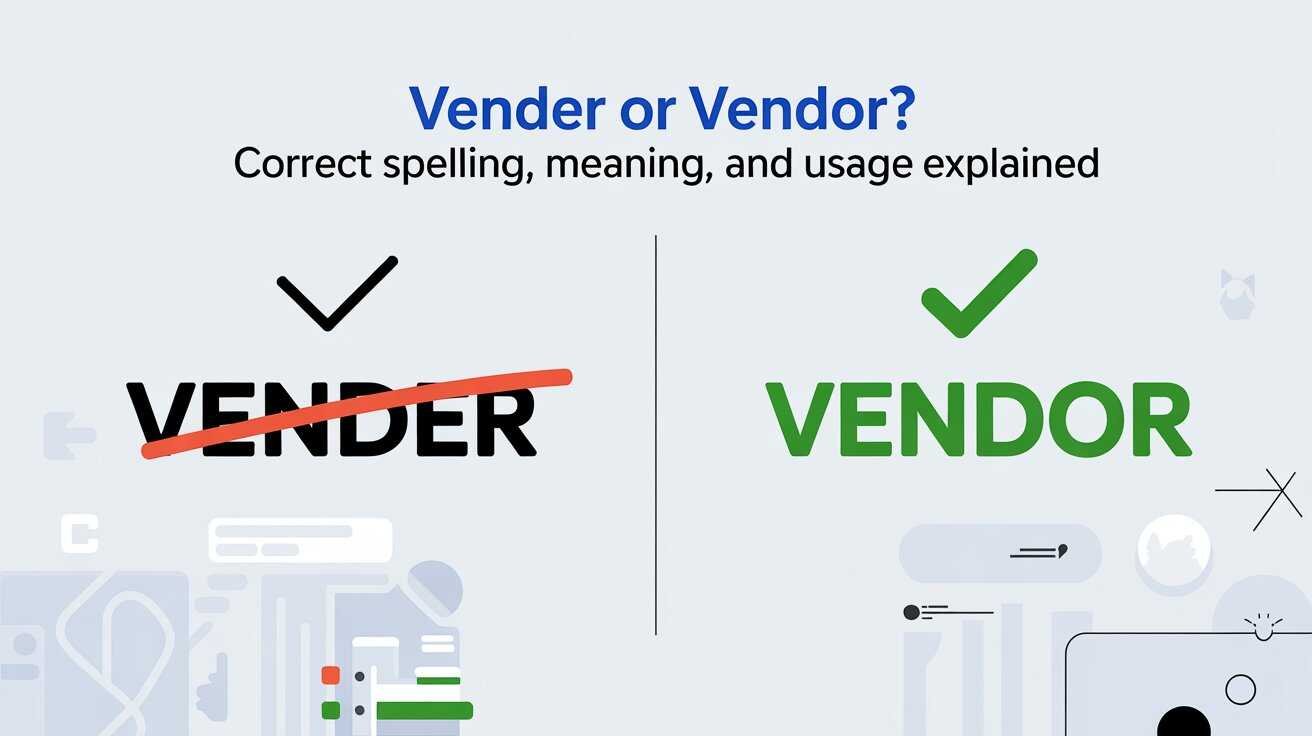
Vender or Vendor? Correct Spelling, Meaning, and Usage Explained
Vender or vendor is a common spelling and usage question in English, especially in business and professional contexts. Many people are unsure which form is correct, when to use it, and what the difference between the two is. The truth is that the correct spelling is “vendor”, recognized in standard English dictionaries and widely used in modern writing.
The term “vender” is rare, mostly historical, and rarely used today except in informal or outdated contexts. Understanding the correct usage of vendor, its meaning, and context will help you communicate clearly, avoid mistakes, and maintain professionalism in emails, business documents, and legal writing.
What Is the Correct Spelling: “Vender” or “Vendor”?
Official Dictionary and Grammar Rules
In standard English, the correct spelling is “vendor”. Dictionaries like Merriam-Webster, Oxford, and Cambridge define vendor as a person or company offering goods or services for sale. The spelling “vender” is not recognized in modern dictionaries and is considered incorrect in formal writing. Historically, “vender” appeared occasionally in older texts, but today, it is outdated and rarely used.
Examples of Correct and Incorrect Usage
| Sentence | Correct Usage | Incorrect Usage |
|---|---|---|
| Selling office supplies | The vendor delivered all the items on time. | The vender delivered all the items on time. ❌ |
| Business transaction | We selected the most reliable vendor for our contract. | We selected the most reliable vender for our contract. ❌ |
| Informal note | Please contact the vendor for more details. | Please contact the vender for more details. ❌ |
Meaning and Definition of Vendor and Vender
Vendor Meaning
A vendor is a person, business, or company that sells goods or provides services. It is commonly used in business, legal, and professional contexts. Vendors can range from street sellers to large corporations supplying products or services globally.
Example: The software vendor provided training sessions for all employees.
Vender Meaning
The word vender is essentially an outdated variant of vendor. While you may still encounter it in very old literature or informal messages, it is not considered standard English. Using “vender” in professional or legal writing is not recommended.
Grammar Rules and Spelling Tips
Why Vendor Is Preferred
In modern English, the spelling vendor is preferred because it aligns with grammatical and lexical standards. It is widely recognized in business English, legal documents, and professional communication. Choosing the correct spelling ensures clarity and prevents your writing from appearing outdated or incorrect.
Common Grammar Mistakes
One of the most common mistakes is confusing vendor with seller or supplier, or mistakenly writing vender. Always remember: vendor = person or business selling goods/services, while seller or supplier may have slightly different business roles.
READ MORE >>>> Goodmorning or Good Morning: Correct Spelling, Meaning & Usage
Usage in Business, Legal, and Professional Contexts
Vendor in Contracts and Procurement
In contracts, procurement, and official business documents, vendor is the accepted term. Contracts often define responsibilities and obligations using this word.
Example:
“The vendor shall provide the services described in Schedule A and ensure timely delivery of all materials.”
Using vender in this context would appear unprofessional and could potentially confuse legal interpretation.
Vendor vs Supplier vs Seller
Though often used interchangeably, there are subtle differences:
| Term | Meaning | Context |
|---|---|---|
| Vendor | Offers goods or services, often for resale or business transactions | Business contracts, professional writing |
| Supplier | Provides materials or products to a company, often raw or wholesale | Manufacturing, procurement |
| Seller | General term for anyone selling products, casual or informal | Everyday transactions |
Understanding these distinctions ensures accurate and professional communication in different business contexts.
Regional Differences and Historical Usage
British vs American English
Both British and American English prefer vendor as the standard spelling. “Vender” is considered archaic and is not commonly used in either dialect.
Etymology and Word History
The term vendor originates from Latin vendere, meaning “to sell”. Historically, “vender” appeared as a variant spelling but fell out of favor over time. Today, vendor dominates modern English usage, both in written and spoken forms.
Digital Communication and Informal Usage
Why Some People Still Write “Vender”
With texting, social media, and informal communication, some people mistakenly write vender instead of vendor. This is usually a typo, autocorrect error, or casual usage, not a reflection of correct grammar.
Should You Correct It in Professional Communication?
Absolutely. Always use vendor in emails, business letters, legal documents, and professional correspondence. Using “vender” in formal writing can reduce credibility and may confuse readers.
Synonyms and Related Terms
Other words related to vendor include seller, merchant, supplier, contractor. Choosing the right term depends on context:
- Seller: Casual, everyday transactions
- Merchant: Traditional term, sometimes used in e-commerce or retail
- Supplier: Often provides raw materials or goods to other businesses
- Contractor: Provides services rather than physical products
Example: The software vendor (not the supplier) provided technical support to the client.
Quick Comparison Table: Vendor vs Vender
| Feature | Vendor | Vender |
|---|---|---|
| Spelling | Correct | Rare / incorrect |
| Usage | Modern, standard English | Historical / outdated |
| Context | Business, legal, formal | Informal or outdated |
| Example | The vendor delivered office equipment. | The vender delivered office equipment. ❌ |
Commonly Asked Questions (FAQs)
1. Is “vender” ever correct?
“Vender” is rare and largely outdated. It is not accepted in standard English or professional writing.
2. Can “vender” be used in casual writing?
It may appear in informal texts or social media, but it is still considered incorrect by formal standards.
3. What is the difference between vendor and supplier?
A vendor sells goods or services directly to clients or businesses, while a supplier provides materials or products, often in bulk, to other businesses.
4. How do you use vendor in a business contract?
Use vendor to define the party providing goods or services, clearly outlining responsibilities, delivery schedules, and obligations.
5. Why do people confuse vender and vendor?
The similarity in spelling and pronunciation causes confusion, especially in casual writing, but modern English officially recognizes vendor only.
Conclusion
The final answer to vender or vendor is clear: the correct spelling is vendor, and it should always be used in professional, legal, and formal contexts. Vender is rare, outdated, and not recommended. Remember the key points: vendor is standard, seller and supplier are related but distinct terms, and using correct spelling enhances clarity and professionalism. By following these guidelines, your writing will be grammatically correct, credible, and ready for both business and academic use.